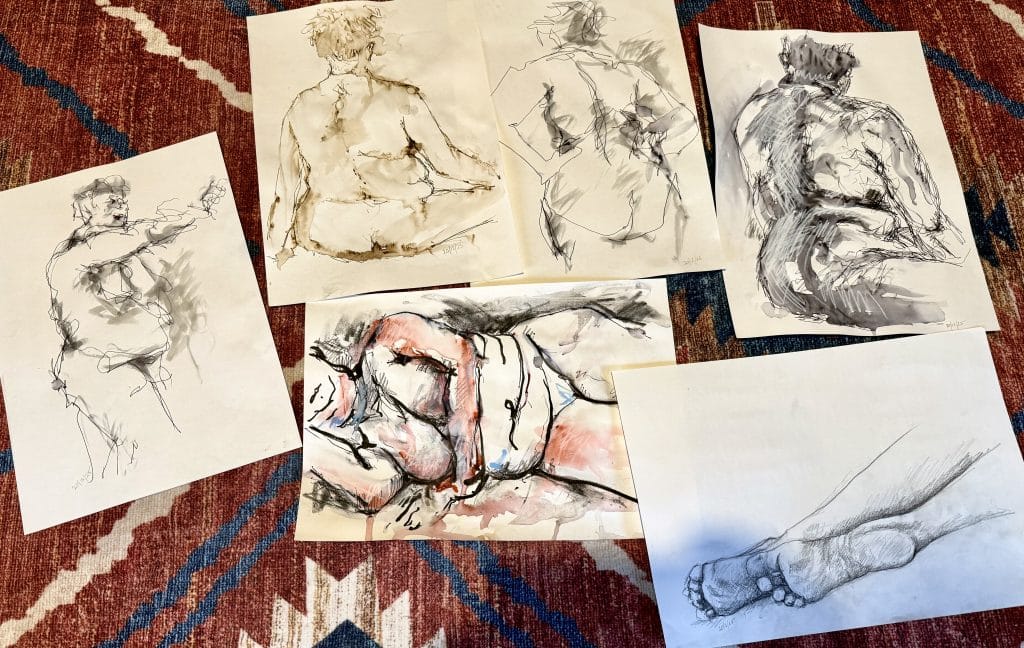
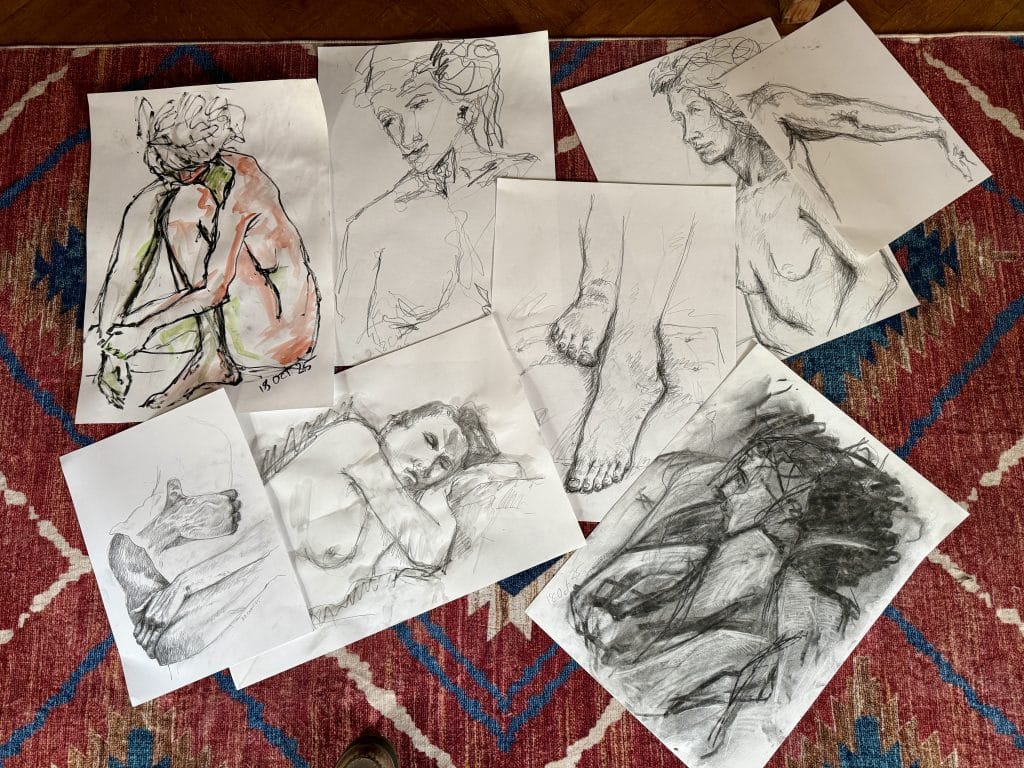
Apart from the feet, which are in pencil, they are all pen and wash. I like the one on the left. I might copy a couple into my iPad and play with Procreate, which would extend the analogue / digital theme from the last post.


Sculpture, spoons and art education
Apart from the feet, which are in pencil, they are all pen and wash. I like the one on the left. I might copy a couple into my iPad and play with Procreate, which would extend the analogue / digital theme from the last post.
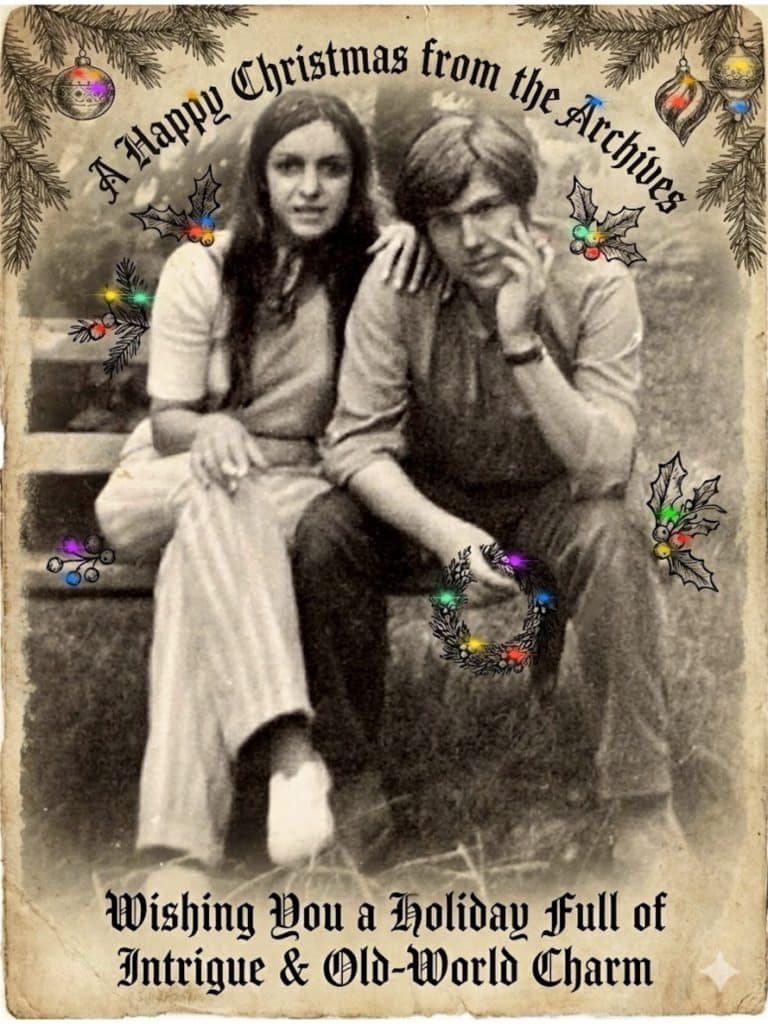
Prompt for the AI programme Gemini: ‘Use this photo [uploaded] to generate a creative Xmas card.’
It’s just an AI generated image, but it’s also an idle reflection on analogue and digital technologies, handmade images and digital craftsmanship.
Happy Christmas
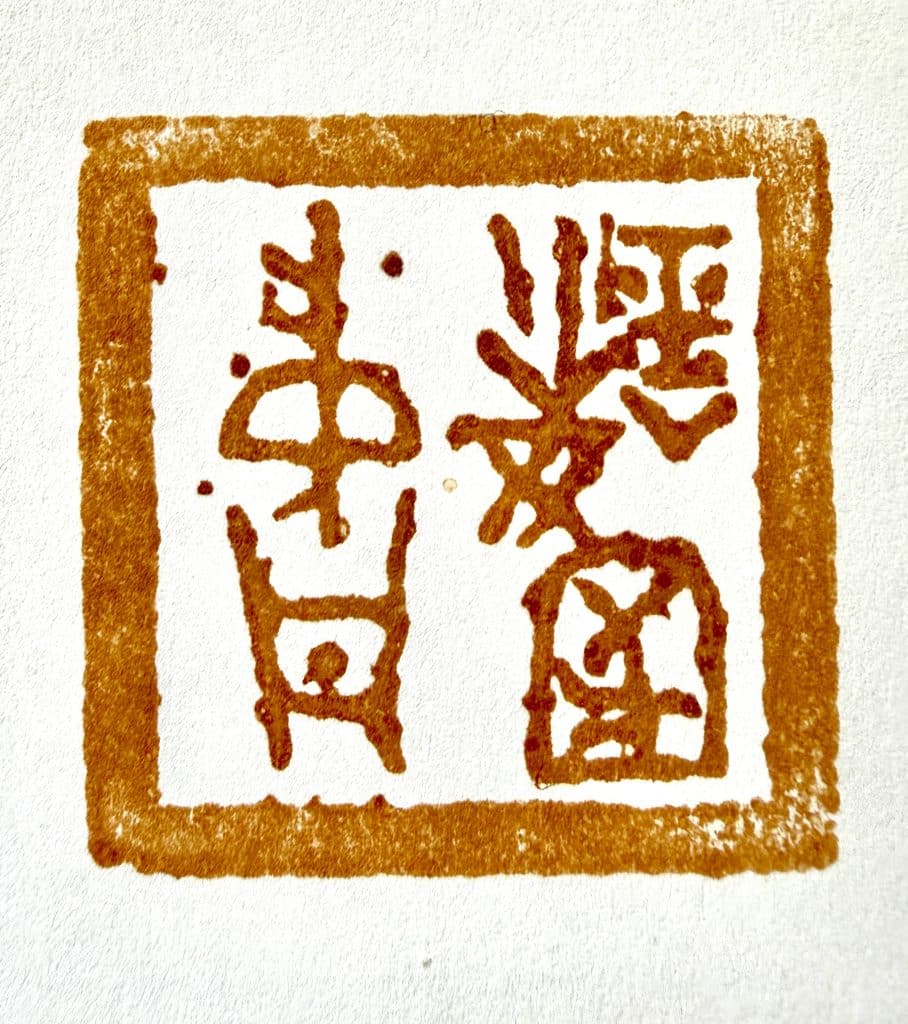
(My personal seal for printing my name on formal documents. A unique identifier carved for me out of stone when I was in China – the ancient analogue equivalent of a QR code.)

Analogue and Digital Craftsmanship
This image has been around for over 50 years. The original photograph was taken in the mid 1970’s by R… aged about 7yrs. He used a Praktica SLR camera with 400 ASA, black and white, Tri-X film. This was developed and printed in the kitchen. E….’s cord trousers were custard yellow and came from Biba.
Forty years later the negative was digitised and early Adobe Photoshop was used to generate the positive image. Some years after that the image was again edited with Photoshop to sharpen, remove dust, repair, repaint and adjust tones. It was then printed out as an A3 (sepia) coloured print on an inkjet printer.
Finally, this year, the image (jpg) was uploaded as part of a prompt into Gemini (AI) which generated this distressed Xmas card edition, including the text. This is now published above – on this website. Oh, and the coloured lights were put in with a digital iPen using Procreate on an iPad.
Xmas puzzle: If you are a friendly passing art educator, you could reflect on how to ‘critique’ or assess this. What might be the criteria? I haven’t a clue. The idea for this year’s Xmas card came from work I have been doing about AI in art education (artteachingstuff.com). For more about AI and digital craftsmanship see my article in Futureminds.
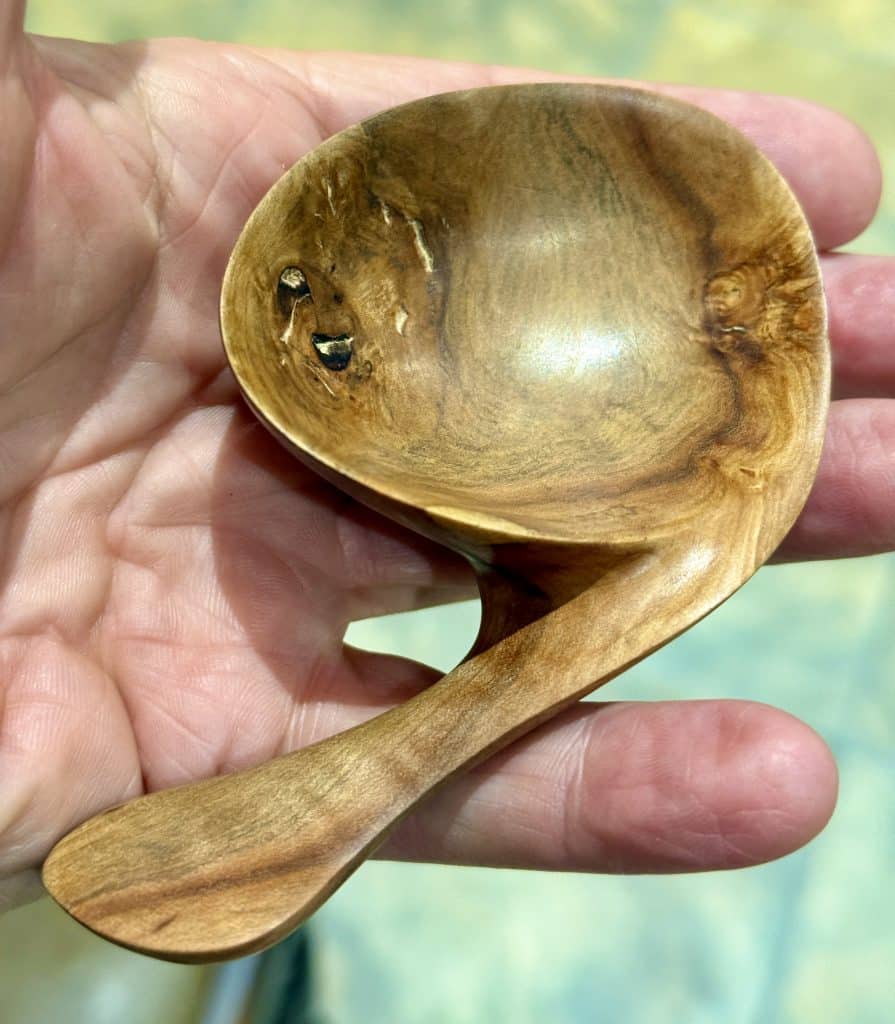
This was an old piece of applewood that had been in the back of a garage for decades. Dry as a bone and hard as iron. It put up a fight.
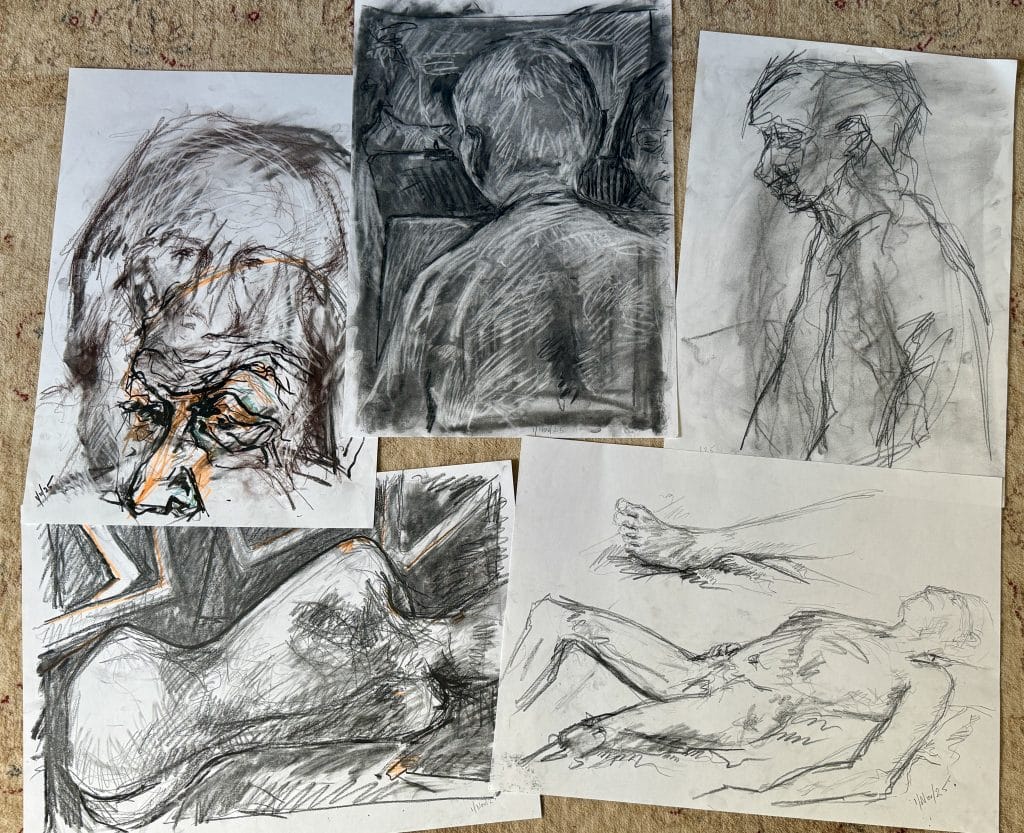
I had two life classes this weekend, one live, one online (from the Royal Drawing School). I like the two ‘warm up’ (two minute) drawings the best.
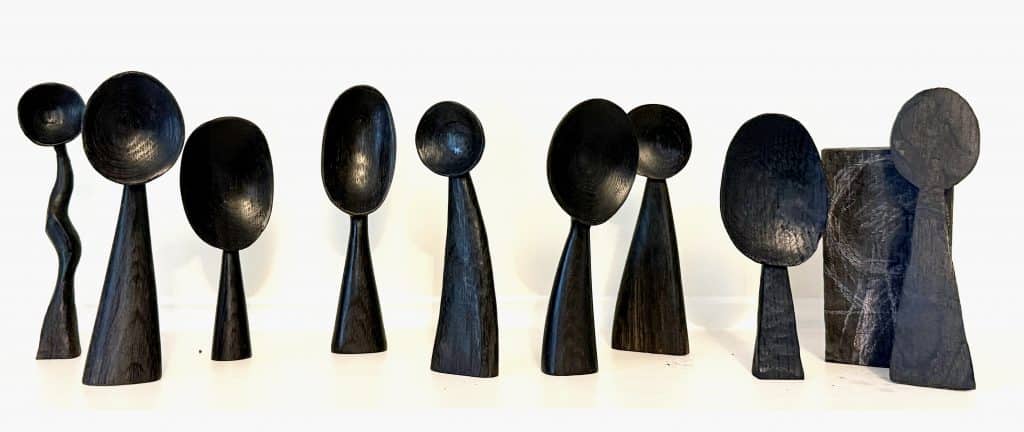
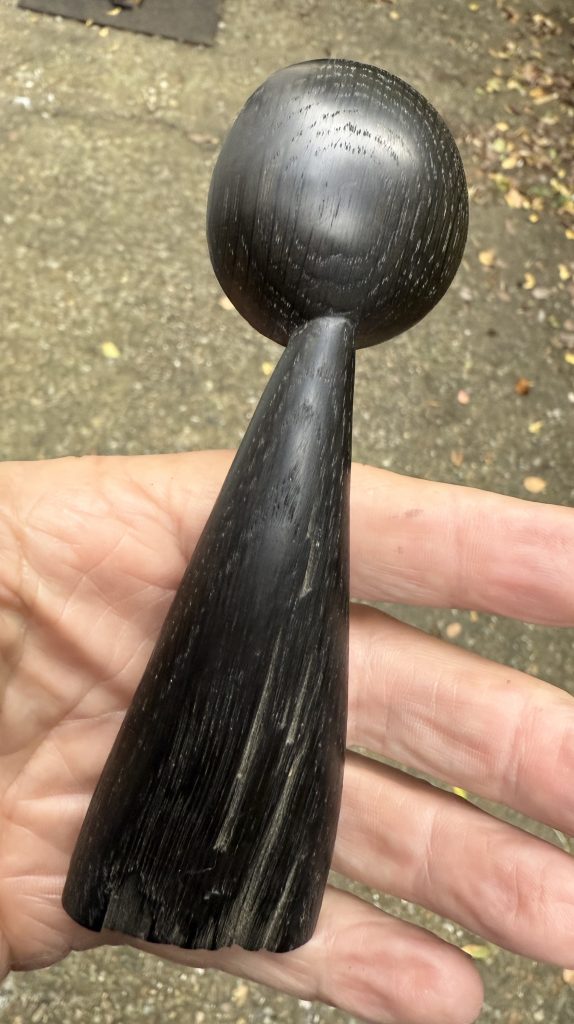
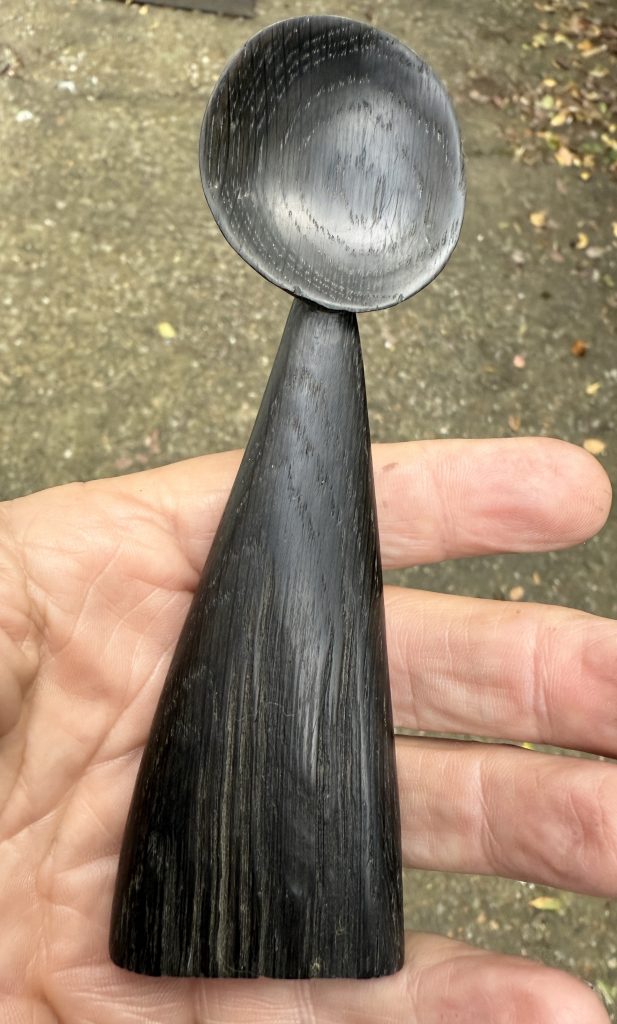
The family of bog oak spoons has continued to grow over the summer. The two on the right-hand side have just been started. I have a small chunk left and think I will continue with this theme. The two pieces of bog oak came from the fens in East Anglia. Google has it that bog oak from this region is often about 3,500 years old.
This old preserved wood doesn’t seem to be as dense as it is described, but that could be due to the fact that it may not have been dried out as carefully as it should have been when it was unearthed. It seems to have lost structural intergrity in the fibres and some parts of the grain are quite soft and prone to splintering. But it is relatively easy to cut and polishes up to a glorious black, ebony finish.
I don’t often use fresh greenwood these days. Most of my work is done with seasoned, dry or vintage bits of wood. Some of it is really quite old, for instance the shallow flat ladles carved from an old victorian occasional table top.
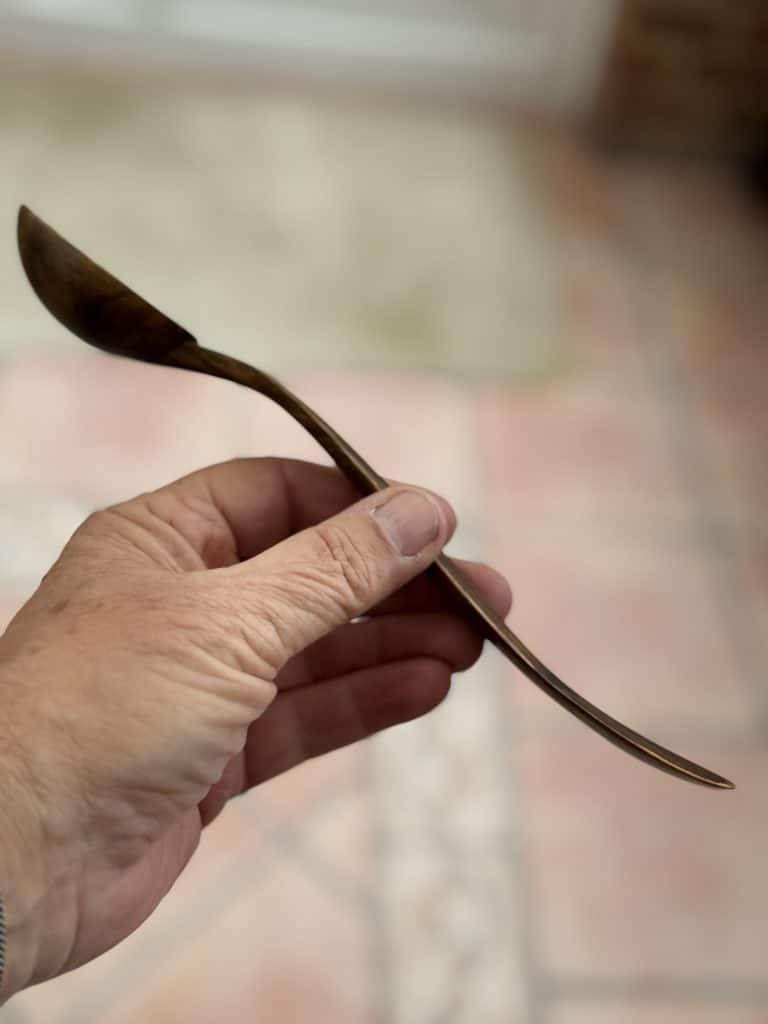
But this was carved from a piece of beech freshly cut from the garden. It was nice to use greenwood again because it is easy, like carving carrots. But I’m not sure I liked the finished piece. I’ve got used to the old wood fighting back. This didn’t, so it all felt a bit too easy.
Seems distressed spoons is a thing this summer.
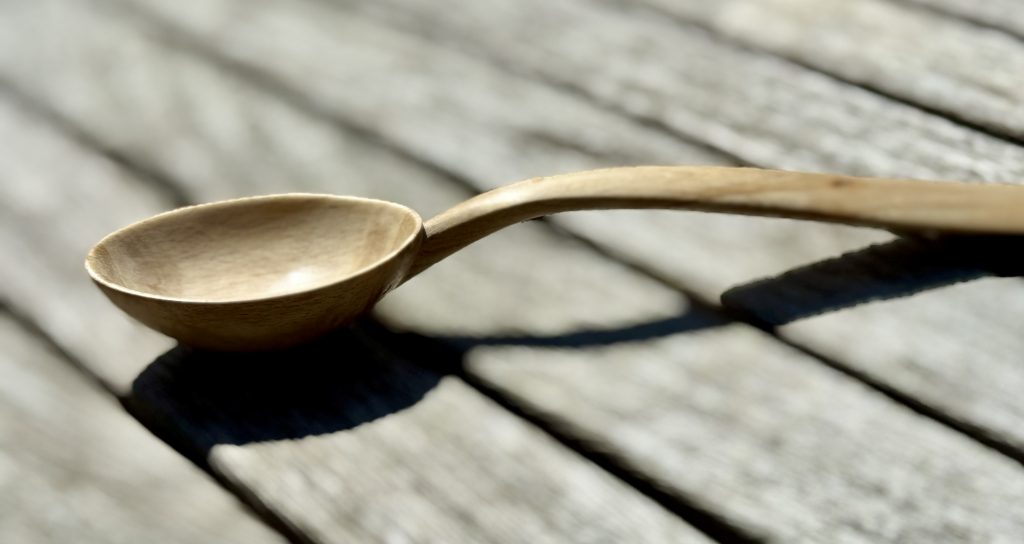
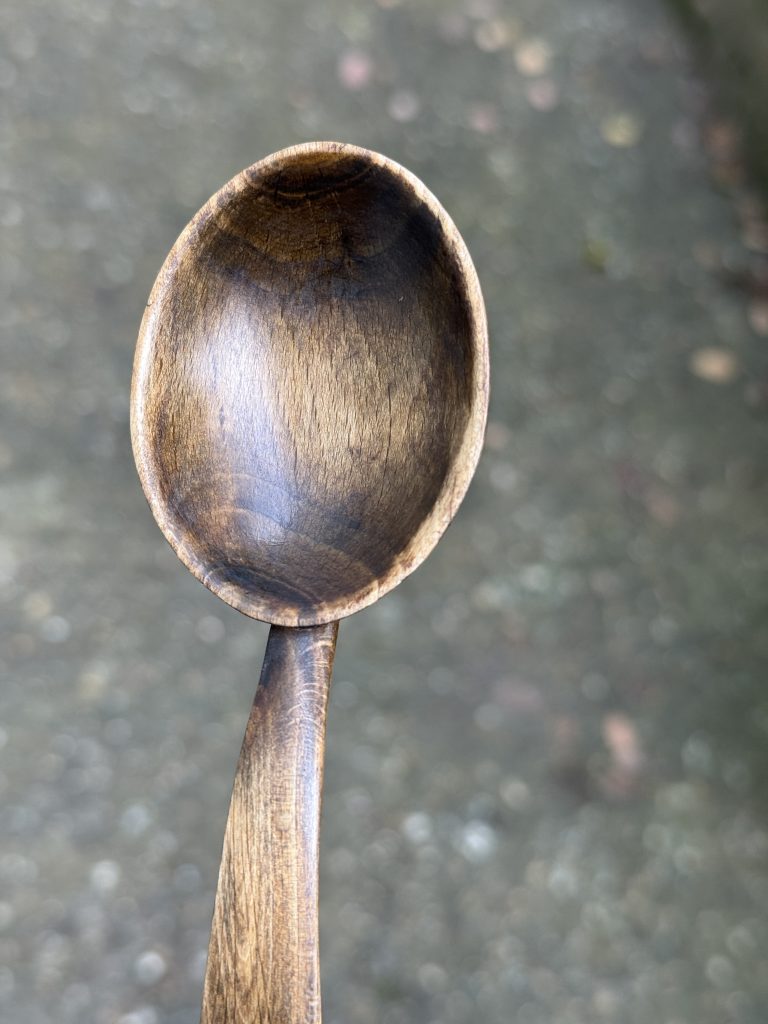
This was an experimental piece. The wood is beech and it was freshly cut and kept wrapped in the fridge between sessions to keep the moisture content high. So it was easy to carve. Files and wet and dry papers were used to complete the shape and finish. It was then brushed with cold tea to raise the grain and increase the tannins in the wood. A solution of white vinegar, in which wire wool had been soaking for a few days, was finally brushed on. This generated the reaction and turned the wood dark brown. The spoon was then rubbed back with wire wool and finished with Walnut oil. The wire wool tended to lighten the top surfaces allowing the inside edges to retain more colour – which gives the appearance of age.
Here is the result.
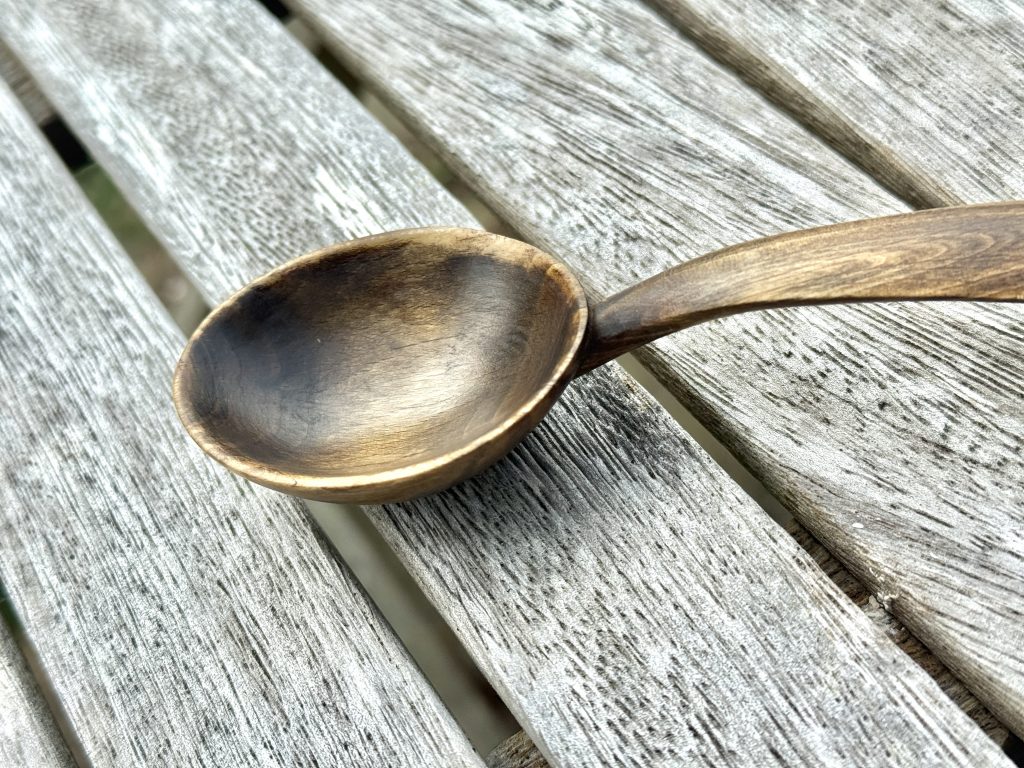
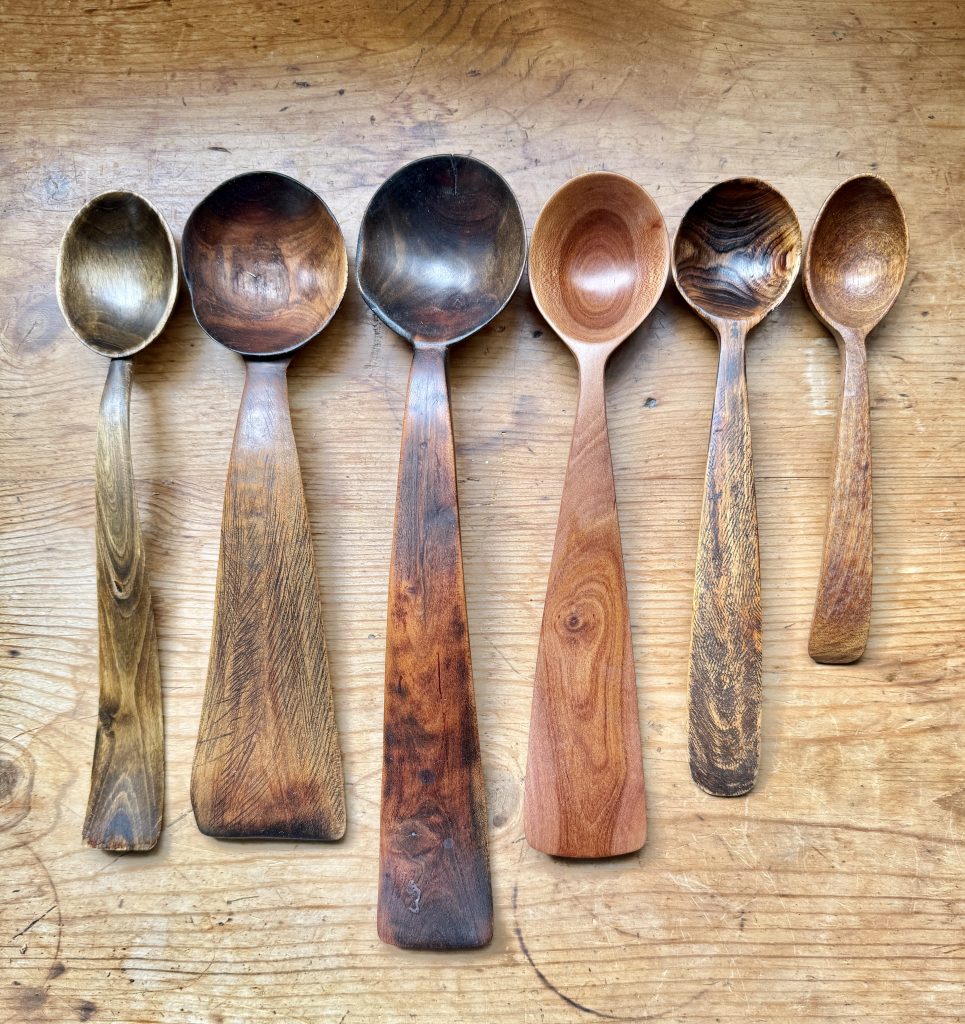
Here are some other ‘distressed’ spoons, using fire and stains.
I don’t often use an iPad in these life classes, but I felt a need for precision today and didn’t have a sharp pencil. Also wanted to look at hands. This is using ‘Procreate‘ which I enjoy using for drawing.


I’m enjoying regular life classes at Hastings Contemporary. Really excellent tutors, who keep me way out of my comfort zone. Must work on hands, or sausages, as I like to call them.


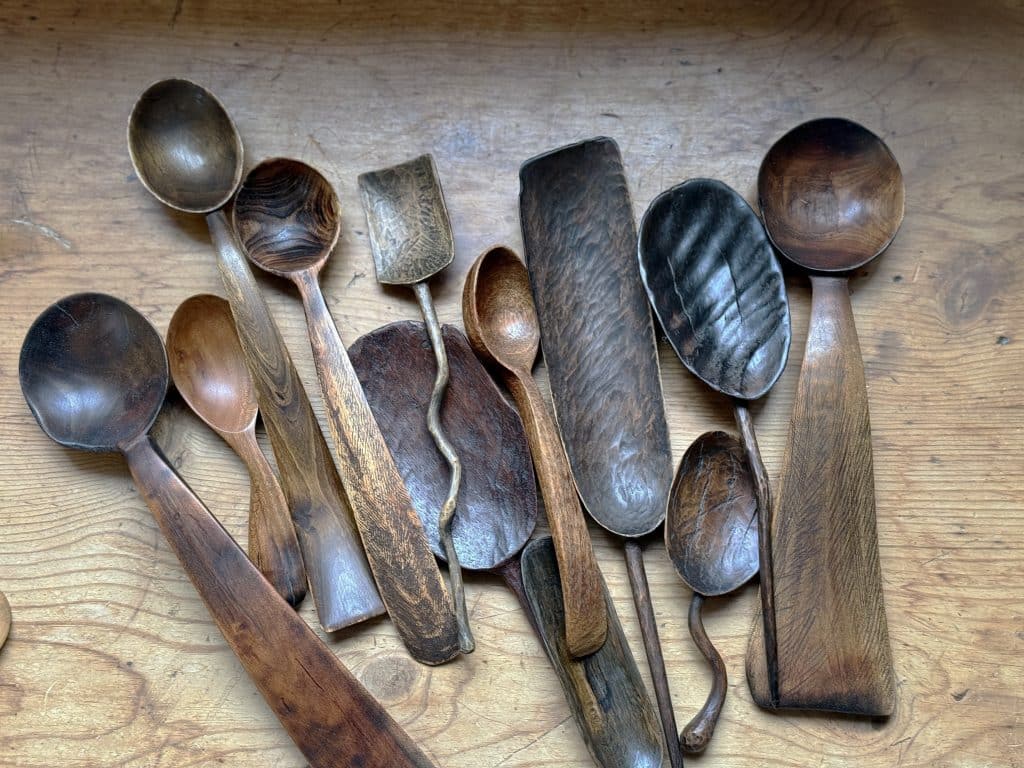
This collection of distressed spoons have all been burnt, stained, scratched, ebonised or cracked in different ways. Some have been carved from already compromised offcuts. I have posted these before, but increasingly I’ve been looking at old medeival spoons from the UK, Scandinavia, Africa and elsewhere. More Mary Rose than Ikea.

Just added more. One waiting to be oiled and another roughed out ready to start carving.

Working from a musician absorbed in playing. I did this on my iPod with Procreate. I hadn’t used that programme for years but another member of the group was using it and had a really appealing and sensitive line. I’m really enjoying it. It is great to use with an apple pencil. Below is a stop frame video of the drawing being made – really love Procreate.

I joined a drawing group in a back room of the Horse and Groom in St Leonard’s. Just people who want to draw and organised by Teressa. Loved it.


This was all quite liberating and I’ve done another 10 drawings since then. Mostly out and about with a fountain pen and some finished later with Procreate on the iPad.


That’s the last Thursday of the month sorted.
I’ve just finished resetting all the AI stuff into a new website so it doesn’t get confused with my spoons and stuff. I’ve been working on it quite intensively for three or four months now. Partly writing it, then restructuring the content for the web rather than paper, and lastly having to relearn WordPress.
Here is the link.
So it’s a relief to have finished the challenges I set myself. Now I can look to other bits of disparate creativity like spoons and sketch books.

That’s the second of, what feels like, a family of spoons from these two pieces of bog oak. I’ve also got another two pieces ready to carve.
I don’t think they can take fine carving. The old wood is too fragile for that, so they will stay rustic. I rather like the way they stand up almost like small figures. Now I’ve got the basic format I can just crack on.

Just blocking out the basic structure of another small bog oak spoon.
I’ve just been grazing through a book of David Hockney’s drawings from the late 1960’s early 1970’s. They were shockingly familiar because I had bought the first Hockney book – a significant expense and my first major art book purchase. What was strange was how looking back on these old 1970’s drawings of Mo, Celia, Ossie, Peter I recalled how, as a young student, I saw them as being older and part of a golden generation. This book was small and the reproductions modest. But for a second I was once again an awed young man looking at the art of the new. I was surprised that these simple drawings still held that fresh appeal for me after 55 years.

This morning the UK government issued a press release setting out a blueprint to turbocharge AI. This appears to herald a dramatic change to the approach adopted by the previous administration. The earlier approach was measured and gave equal emphasis to dangers and safeguarding concerns while accepting the advantages. The government now declares the intention to ensure the UK takes a leading role in advancing the development and adoption of artificial intelligence globally.
“Artificial intelligence will be unleashed across the UK to deliver a decade of national renewal, under a new plan announced today (13 January 2025).
AI Opportunities Action Plan
In a marked move from the previous government’s approach, the Prime Minister is throwing the full weight of Whitehall behind this industry by agreeing to take forward all 50 recommendations set out by Matt Clifford in his game-changing AI Opportunities Action Plan.”
January 2025
This will take some time to achieve because it depends on structural as well as intellectual and attitudinal change. However, this represents a sea change in the approach to AI and will affect and embrace education. It is too soon to see how this will affect the AI sections of this site – but it will.
Click here to see the 50 recommendations that have been accepted by the government.

Used my iPad app to work up this page of drawings for a family of spoons. These were based on the first bog oak spoon I made last week. I did make a very small one from a chip of wood but I tested it to destruction and it broke. I think these bog oak spoons will need to be quite loosely carved as the surface appears to show its age.
I have just read this post on ‘The Kennet School Learning Blog’, ‘written’ by Karen Hornby (Head of Art). ‘Artificial Intelligence and the Art Curriculum: are we redundant yet?
It made me laugh in admiration of both AI and Karen. It is worth reading through to the end.

I spent months looking at this piece of bog oak, not sure what to do with it. In the end I just started the spoon on the last day of the year, a vague self imposed deadline.

I didn’t really know what I wanted to do, But it seemed to be in control and demanded to be simple, roughly worked and lightly finished. It has ended up as a vaguely medieval spoon for gruel or a miniature, contemporary sculpture.
It was curious to carve. The grain had long since disappeared and it was neutral and crumbled easily. But it has a rich dark colour (with walnut oil) and the blade leaves crisp cuts across the grain: less so with the grain.
I rather like the end result and it may be I’ll make a family group.
I’m currently working with old friends, colleagues, and the NSEAD to understand why we don’t seem to talk about ‘design’ anymore. I’m not sure if we have stopped doing it, or simply stopped talking about it. Check out ‘Art Education/Student Creatives‘.
